As a Preventive Cardiologist and head of a Cardiac Rehab Centre, I often ask myself the question, “Is the nature of work a reason for a person’s heart attack?” Putting together recent medical research and my decade-long interactions with patients and their family members, I have gained some insights into this aspect of how our jobs can make or break our heart health.
The following job categories are reported to have a higher association with heart attacks:
- Doctors / Nurses / Other healthcare professionals
- Business executives
- IT professionals
- Banking / Financial sector
- Administrative sector
- Secretarial jobs
- Customer service sector
- Manufacturing sector / blue collar jobs
- Entertainment industry
We are aware that heart attack is a multifactorial disease with lifestyle, environmental and metabolic factors playing a role in the causation. We also know that evidence is mounting on the health hazards of air pollution and elevated noise levels, and that jobs with exposure to either or both of these will obviously pose a threat. However, the three culprits common to all the above high-risk jobs are mental stress, prolonged sitting and unhealthy eating.
Job Stress
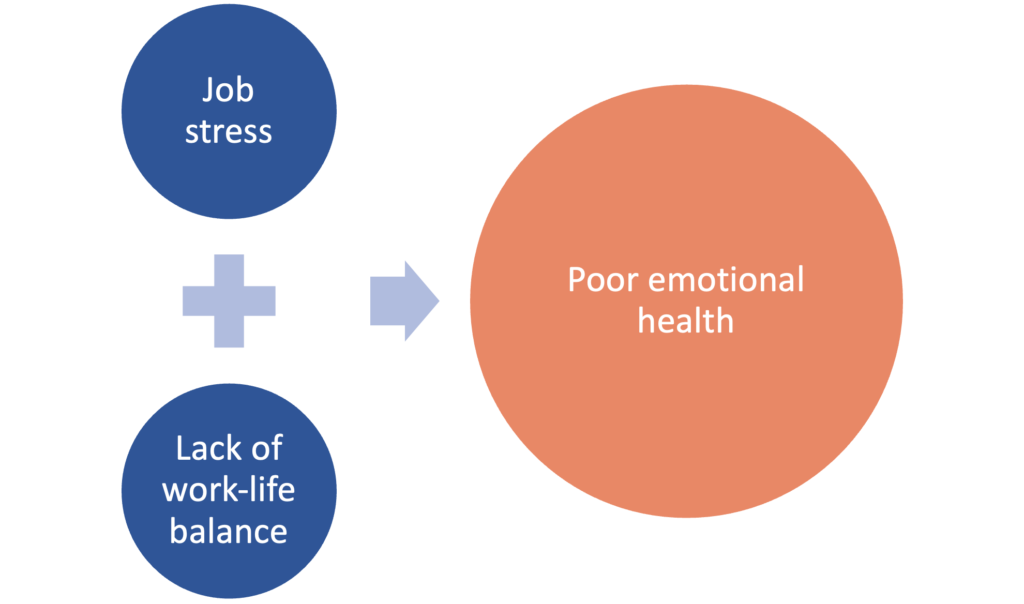
The term ‘Job Stress’ refers to the mental stress caused by work pressures, unrealistic expectations at work and the lack of control over work-related occurrences. Job stress leads to poor work-life balance and vice versa. This vicious cycle quickly escalates to poor emotional health and becomes causative for hypertension, insomnia, metabolic dysfunction and cardiovascular disease like heart attack and stroke.
Jobs where one is directly responsible for the health, wellbeing, finances, experience and satisfaction of others are typically considered high stress jobs.
Prolonged Sitting
Any job that requires continuous sitting, be it computer-related, banking-related, administrative or similar, can have deleterious effects on our heart health. Even long-distance drivers, pilots, frequent intercontinental travelers are at a high risk as they tend to stay in the seated position for more than a couple of hours.
Our earlier article had touched upon how prolonged sitting is as bad for the heart as smoking is (link). We now know that the antidote to this is taking frequent breaks to stand up, walk, and do some exercises. In fact, any physical movement to interrupt the monotony of sitting will give the body’s circulation a vitality boost. Ideally, every 30 minutes of sitting should be pulsed with 5-10 minutes of movement. This will not only ensure your blood vessels are working will but will also improve your productivity at work as the brain gets recharged during movement.

Unhealthy Eating
The poor eating habits that are observed in these high-risk jobs are possibly due to a combination of stress eating, eating to break the boredom of sitting and snacking on unhealthy foods to fuel the brain cells that are also reeling under the pressure of stress and sedentariness. It is not a trait that you have to live with. It is a behavior that can be modified.
- Are you eating while sitting at your work desk?
- Are you snacking on high salt / sugar / packaged foods?
- Are you consuming packaged beverages or caffeinated drinks often?
- Are you eating when not hungry?
- Are you eating when stressed?
If you have answered ‘yes’ to one or more of the above questions, it is advisable to seek the help of a doctor or dietitian to support your behavior modification journey.
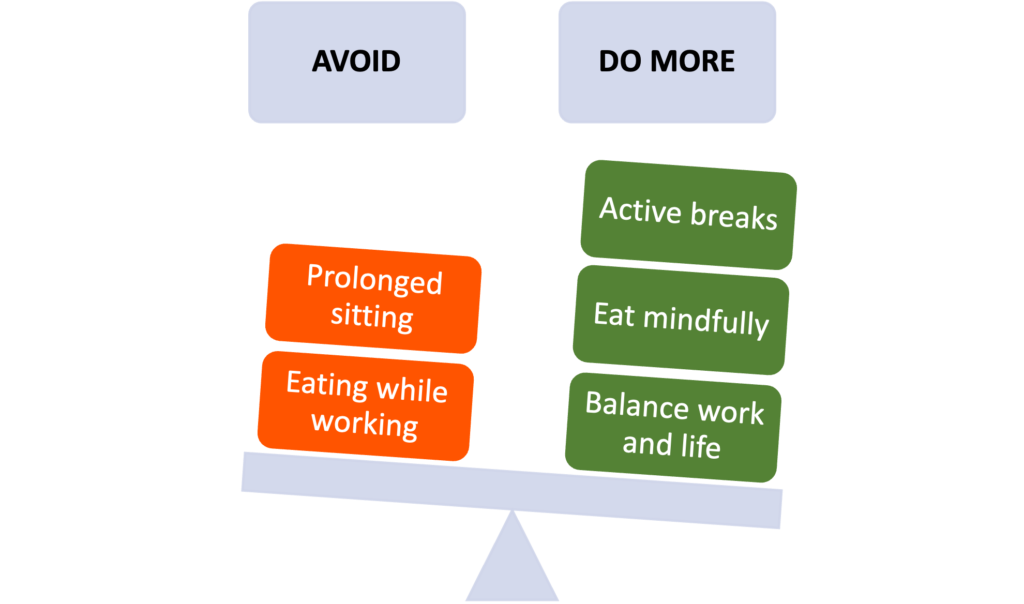
In summary, if you are currently engaged in any of the high-risk jobs or have the hazardous heart health risk factors mentioned above, it is time to take remedial measures. Support is just around the corner to help you have a comprehensive understanding of your risk for heart disease and to guide you in accordance with your personal choices and lifestyle patterns.